Over a decade ago I was running an e-commerce food subscription business.
I had built it on a belief that a lot of first-time founders share: make something good and the customers will find you.
They did not find me.
I had a product I was proud of, a website that worked, and a sales graph that looked like a pancake.
So I did what I do when something confuses me.
I studied it obsessively until it stopped being confusing.
For weeks I mapped what was getting the most engagement online.
Which posts spread.
Which products people talked about without being asked.
Which businesses seemed to pull attention toward themselves like a magnet.
Under the surface there were patterns, under the patterns there was psychology, and under the psychology there were frameworks you could learn and apply.
I started calling the whole discipline attention hacking, and I still do.
An unlikely outcome
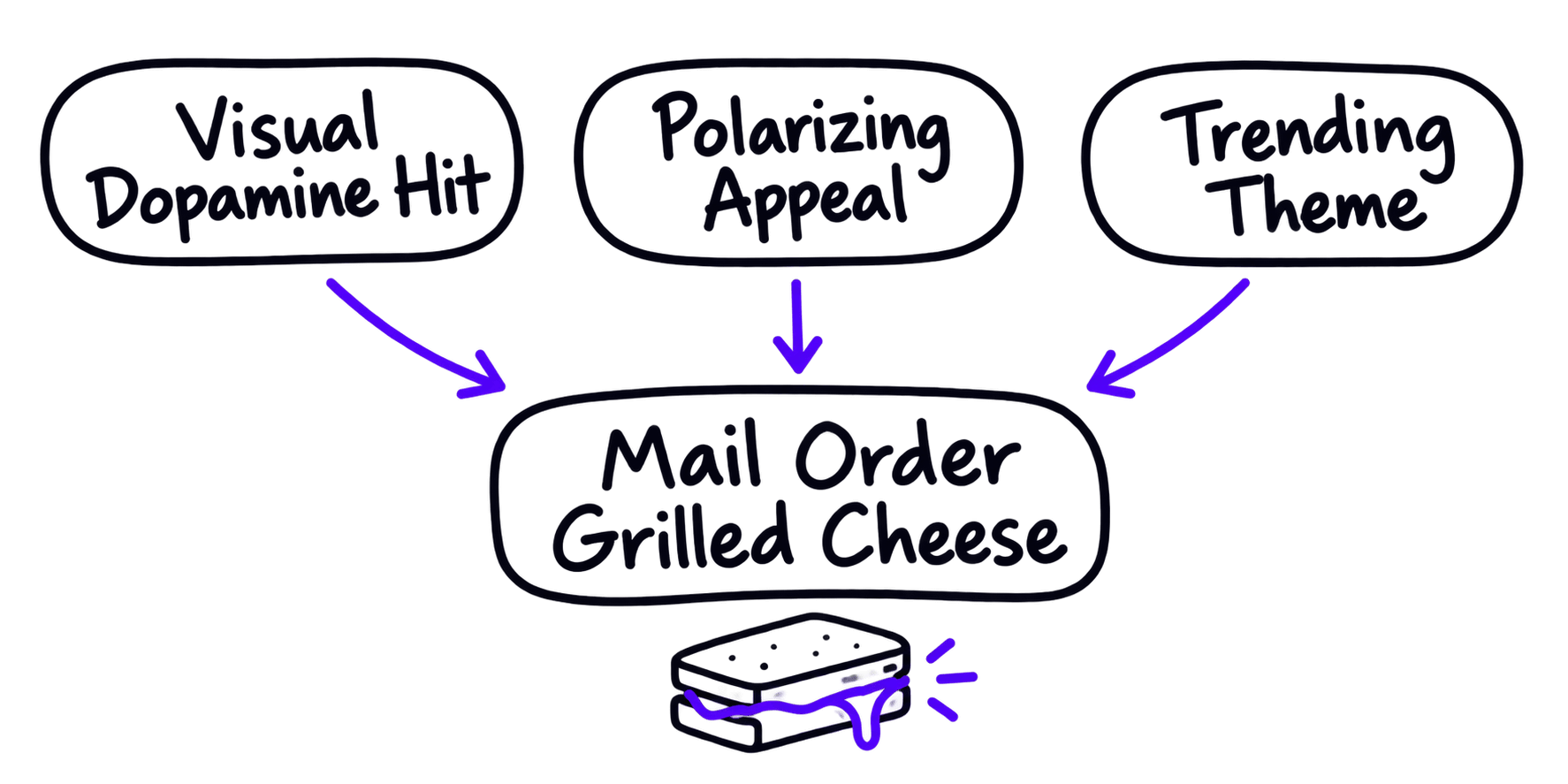
The research kept pointing at one conclusion, and I kept re-running the numbers because I did not want it to be true.
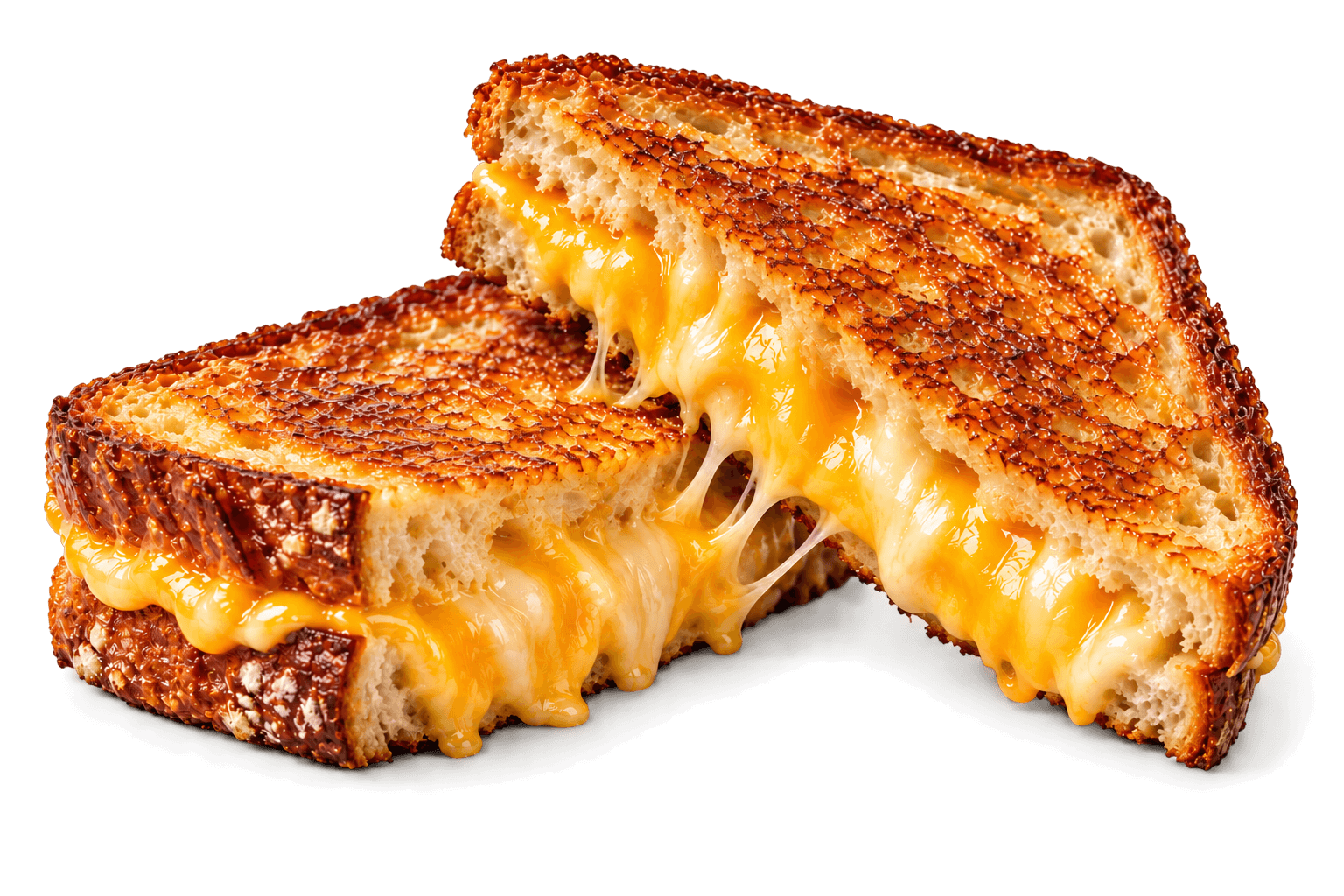
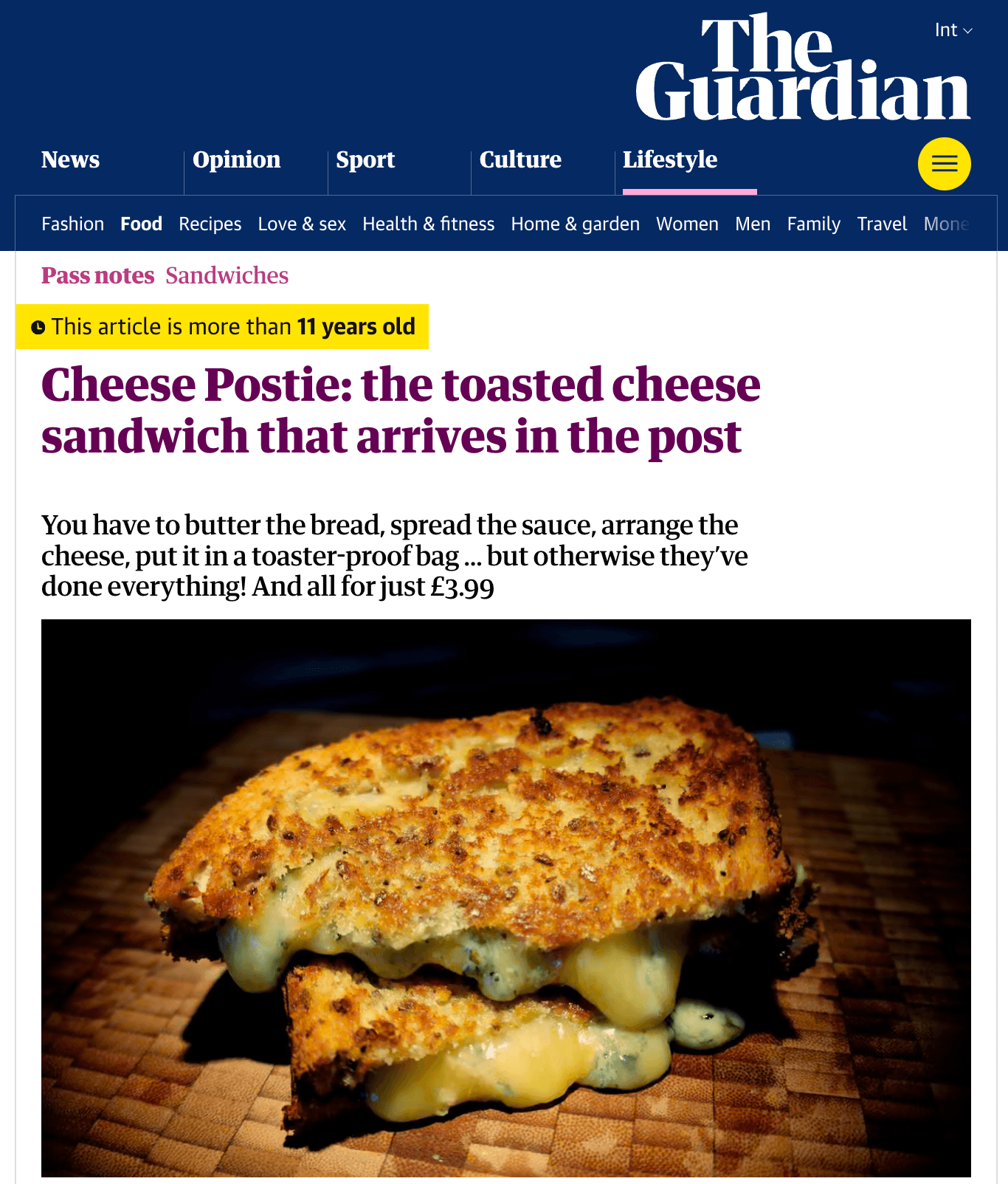
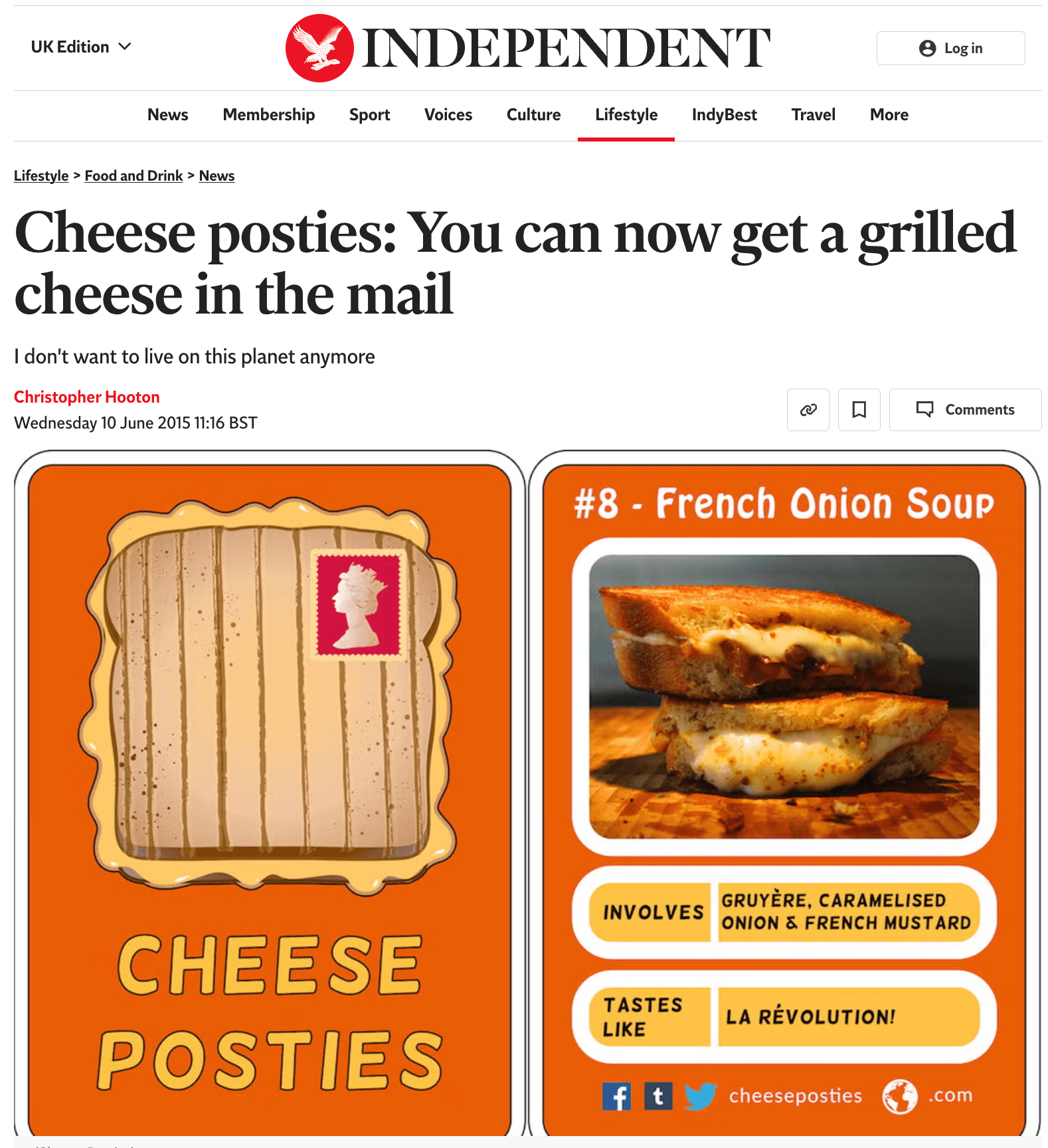
A mail-order grilled cheese sandwich subscription box had a mathematically strong probability of going viral.
It was a ridiculous idea.
I knew it was a ridiculous idea.
I also knew that every signal I had spent weeks gathering said it would work, and once you know that, an idea becomes very hard to leave alone.
So I mocked up a pre-crowdfunding page for the grilled cheese subscription box, posted it online, and went to bed.
02
The business that went viral before it existed.
The next morning I woke up to a text from a friend.
"Holy crap, have you seen the news?"
I had not seen the news.
The news, it turned out, had seen me.
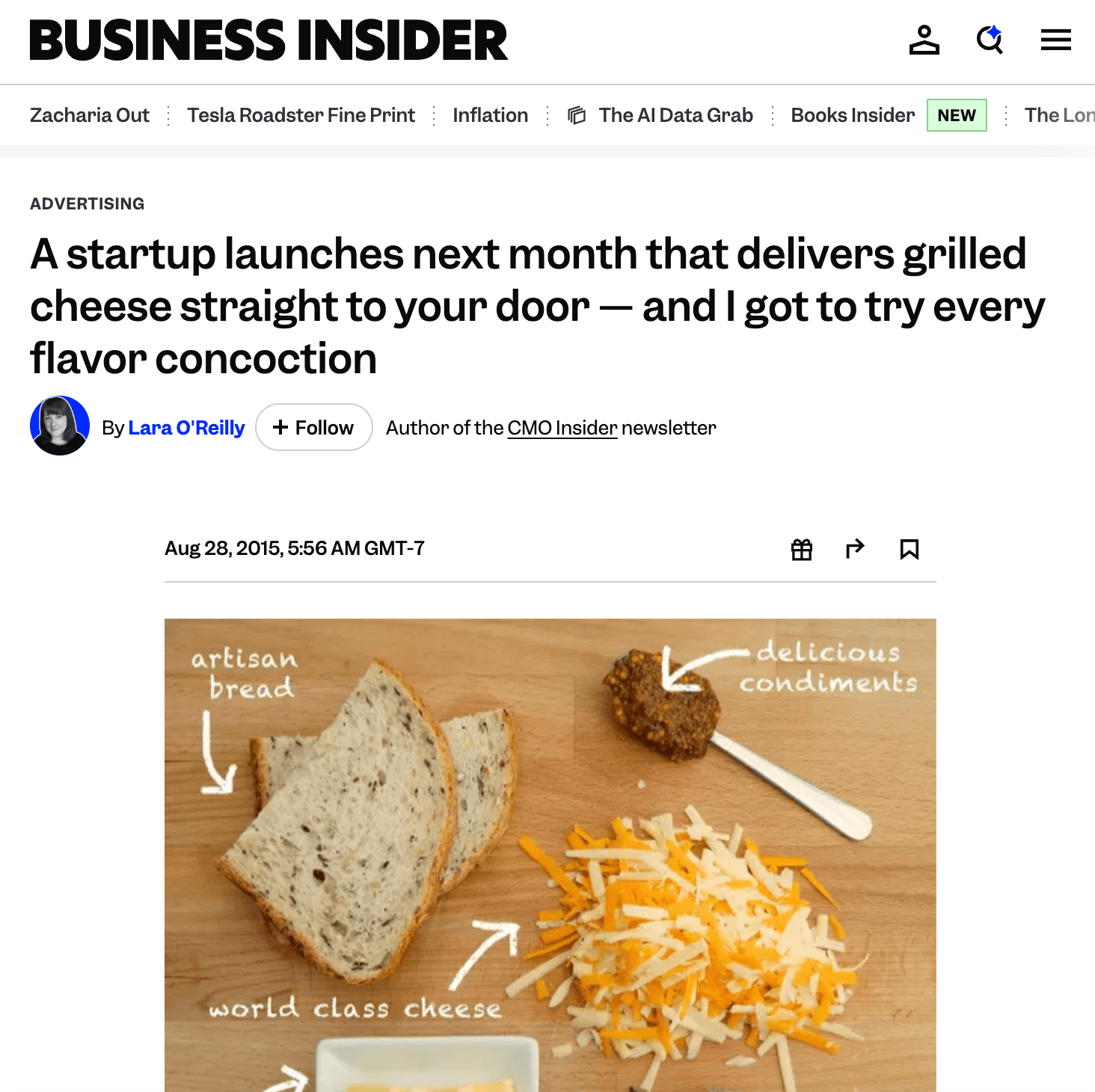
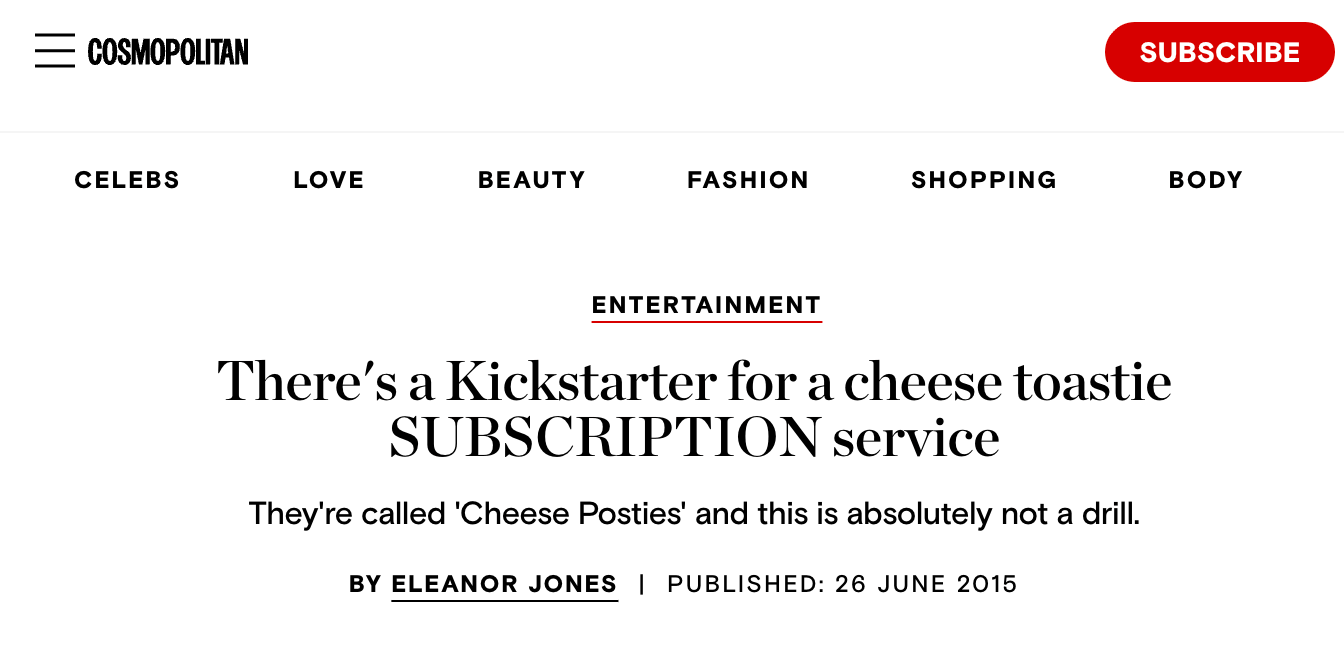
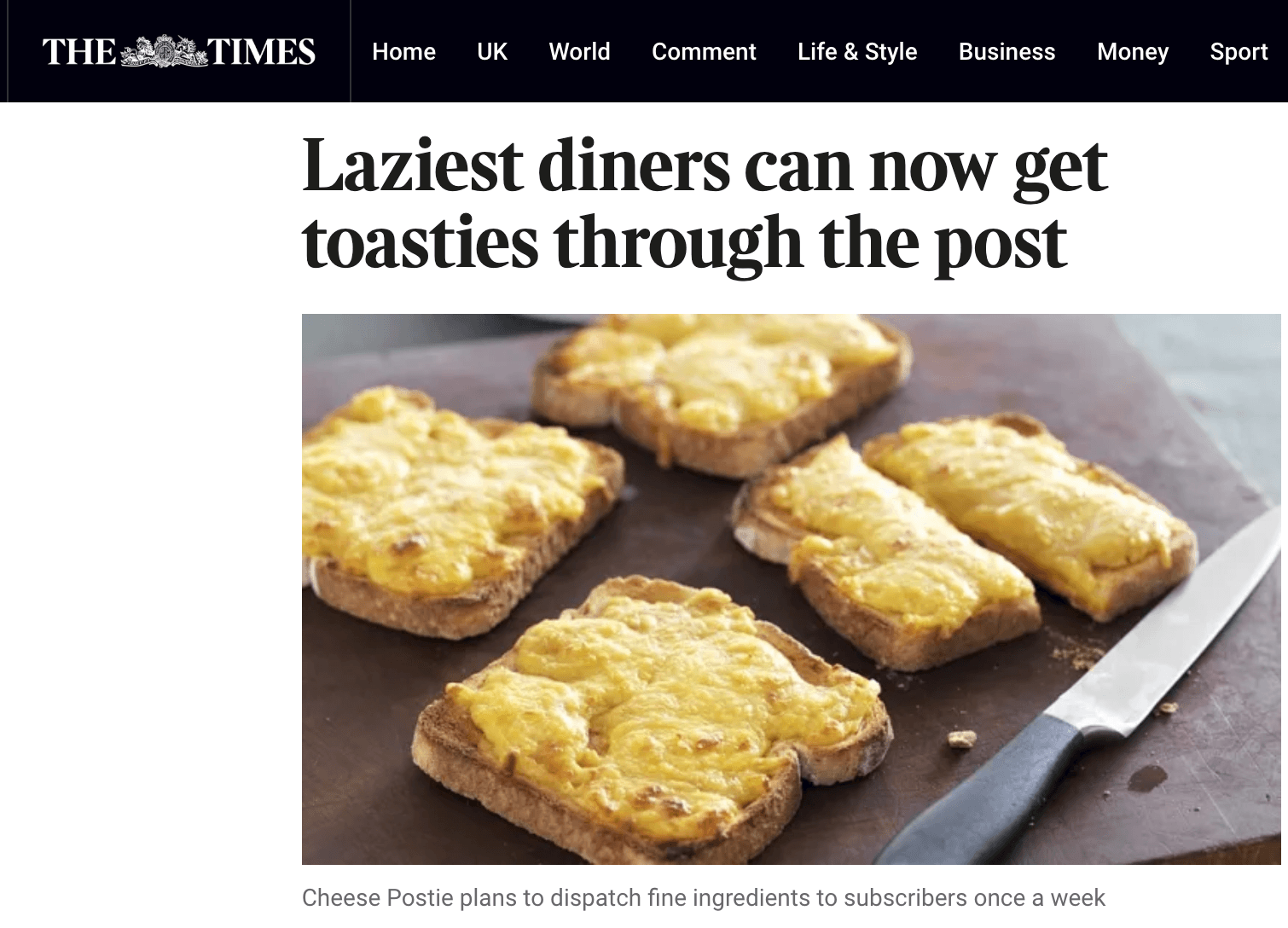
A business that did not exist yet, with no kitchen, no staff and no stock, was being covered in every major UK tabloid.
My phone did not stop for days.
That idea went on to sell over 100,000 subscriptions.
That is roughly where a lot of founder stories stop, with the founder looking wise and the graph heading up and to the right.
The wave I couldn't control
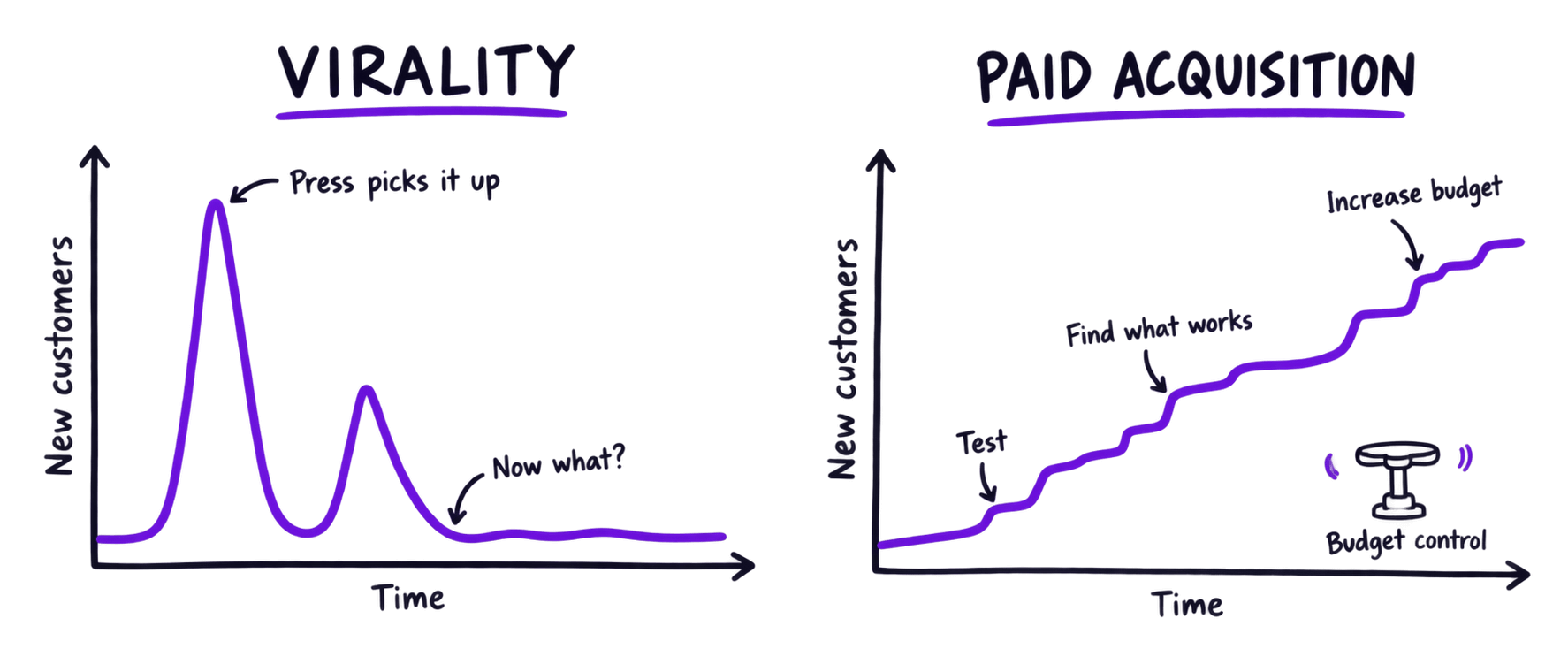
Here is what the graph did next.
It peaked.
Then it fell.
Then it peaked again, a little lower, and fell again.
Virality is a wave, and I was standing on the beach with a cup, and no way to call the next one in.
There was no sustainability to it and no control.
You cannot pay staff with a spike on a graph.
An early mentor put it to me plainly.
A business that can scale needs a reliable tap of customer acquisition.
You turn it on when you want customers, you turn it up when you want more, and you decide when it runs.
Everything else is weather.
What I had was a wave.
And it was about to break on me.
03
Then it all fell apart.
The co-packer that produced the subscription product went into liquidation.
The timing could hardly have been worse.
I had just put every ounce of available capital into upgrading the packaging and the product itself, because the demand was there and I wanted to meet it properly.
The supplier folded, the money went with it, and I was left with almost nothing.
Almost nothing looked like this; A discount Airbnb. A battered mattress on the floor. A laptop, a phone, and a credit card I had no business using.
I put a thousand dollars I did not have on that card and bought a course from Frank Kern.
If you know direct response marketing, you know the name.
Frank is one of the originals, one of the people who worked out how to sell online before most people were sure the internet was for selling.
If you don't know the name, all you need to know is this: I was broke, I was sleeping on a floor, and I borrowed my last thousand dollars to hear what this man had to say.
He said something in that course that redirected the rest of my life.
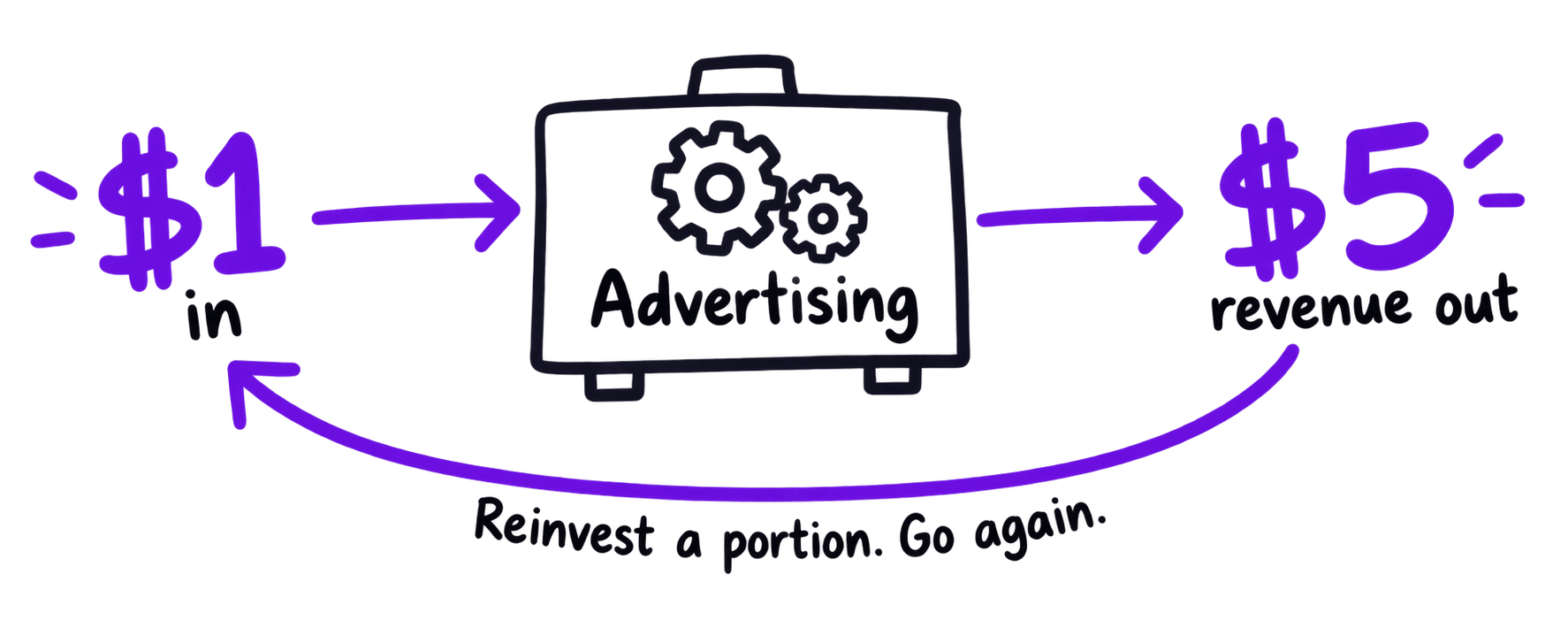
If you can put $1 into ads and get $5 out the other side, and do that continuously, that's the closest thing there is to a personal cash printing press.
I sat with that for a long time.
Nobody I knew talked about advertising like that.
Ads were a cost, a line on a spreadsheet you tried to keep small.
Money in one end, more money out the other, on demand, as many times as you can feed it.
The tap my mentor had told me about had a name, and the name was paid advertising.
04
Turning on the tap.
I set up my first paid ad campaign for the grilled cheese business straight away.
Over the next 30 days, the business did twelve times the revenue it had been doing.
Twelve times. From a mattress on the floor.
Word got around, the way it does when a number like that moves through a small industry.
People started asking whether I could do the same for their businesses.
I said yes, and then I did it, in pretty much every niche you can imagine (and a few you probably can't!).
The results landed so far beyond anything those businesses had seen from advertising that it reset their sense of what an ad account was for.
They had been treating ads like a tax. Now they had a tap.
Frank Kern's team noticed.
They brought me on as Frank's lead media buyer.
Creativity meets numbers
On paper, the role was pure media buying.
Budgets, bids, audiences, the numbers behind the ads.
Creative belonged to someone else.
But I had spent years pulling apart why people stop for one thing and scroll past another, and it turns out you cannot unlearn that.
I would look at an ad we were about to spend real money on and see, very clearly, why nobody would stop for it.
So I started making my own.
Simple video ads, cut together in iMovie with free stock footage, free images and free music.
Cheap to make, and built on every principle of persuasion and attention I had spent the grilled cheese years testing on real people.
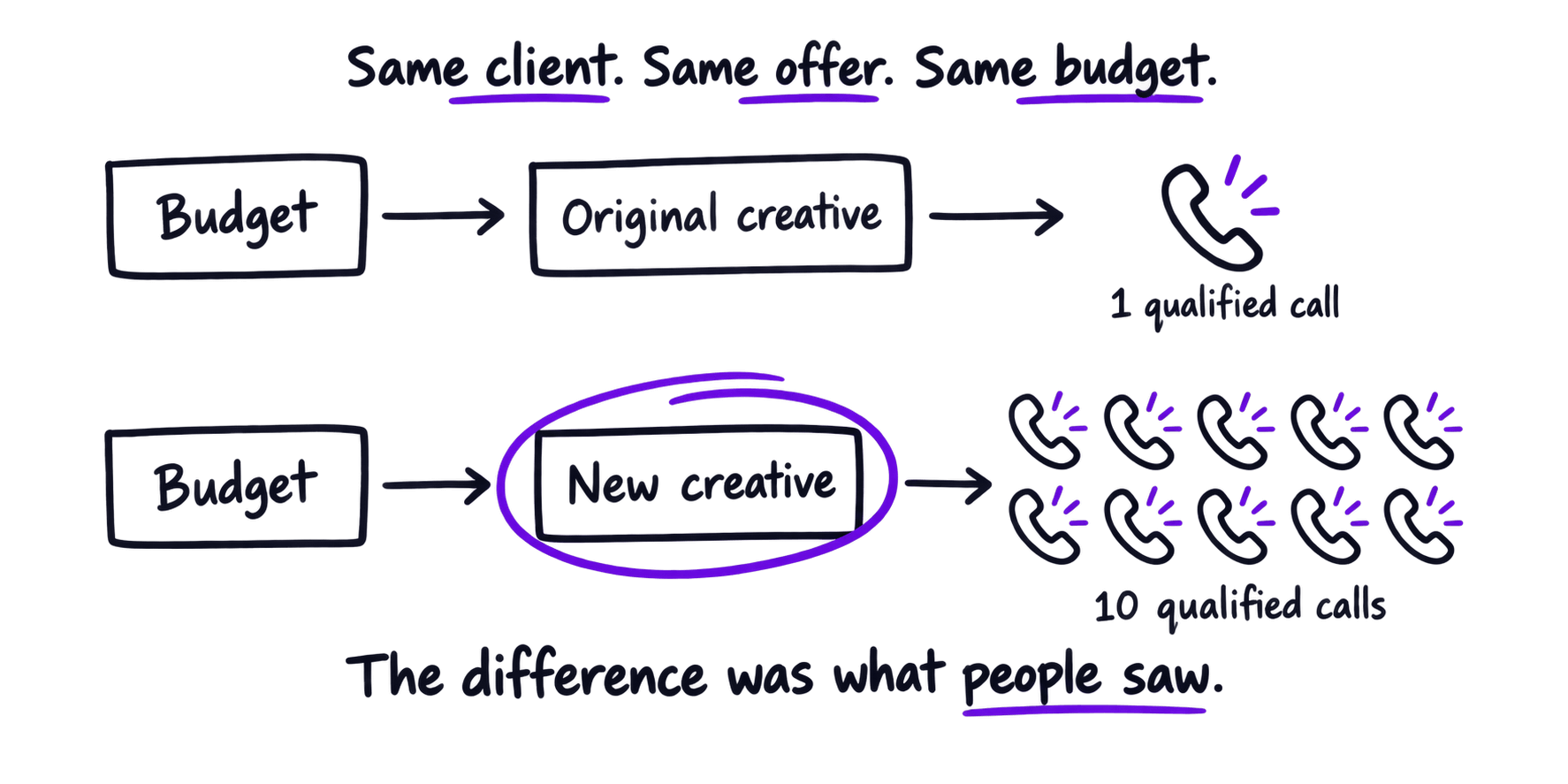
The first client I did this for, I swapped the creative in, went to bed, and woke up the next morning to check the account.
Cost per qualified call had dropped ten times over. Overnight.
Same client, same offer, same budget.
Ten times as many qualified leads for the same spend.
I waited for it to fall over, because most overnight results do.
It held. Week after week, it held.
That morning is the reason Grip exists.
Everything I believed about advertising crystallized in a single account view.
Elite media buying gets you to the table.
The psychology of attention and persuasion is what wins the game.
Fuse the two and you have something most agencies had never tried to build, and that felt too big to keep inside someone else's business.
I left, and not too long after in 2020 started Grip.
05
The problem with most ads.
Most ads suck.
They annoy people and waste their time.
Getting skipped is the best case.
The rest of the time they burn trust and bleed budget.
And when that happens, great brands never get the chance to help the people they could.
It has to Grip.
That is the problem I set out to fix, and it is what our name means.
An ad has one job before it can do any other.
Seize the attention, hold the viewer to the message so hard they cannot look away, and only then earn the right to ask for anything.
Grip.
It was the only name that described the real work.
Building the method
The reputation came fast.
In the direct response world, Grip became known for getting past the ceiling other agencies hit.
One insight did most of the work.
Optimizing the media buying alone, the audiences and bids and budgets, gets you small gains.
Swap the creative for something that Grips, and results can move tenfold overnight, exactly as they had in that first account.
When Grip started, that was a pioneering position.
Most of the industry was still arguing about bid strategies, and saying creative was the biggest lever out loud got you looks.
Today the whole industry treats it as obvious.
So we built the company around it.
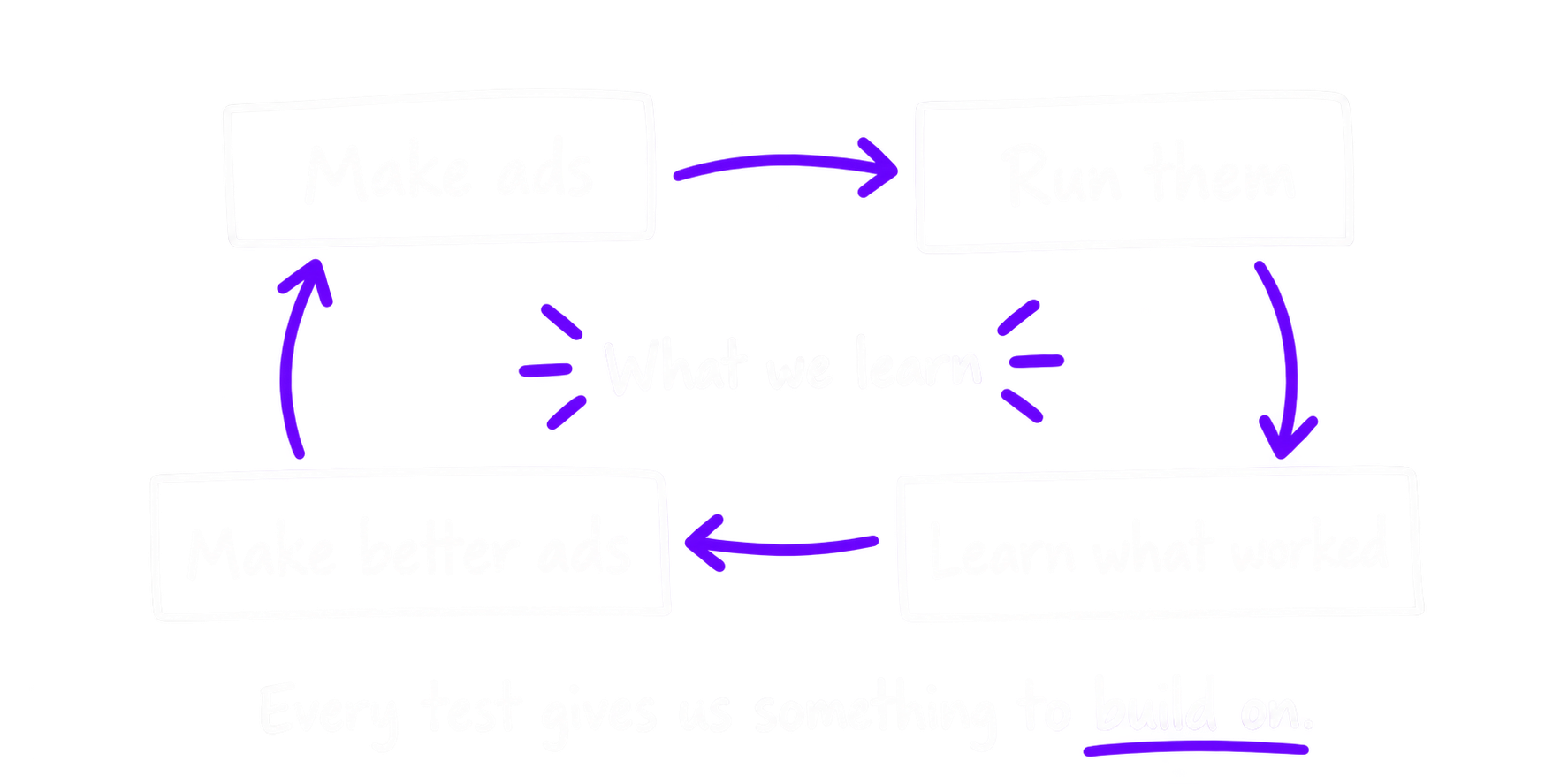
We test far more creative than our competitors, and every test feeds a loop of what works that compounds from one campaign to the next.
We analyze creative deeply, frame by frame and line by line.
And we go further into the psychology of a client's highest-value customer than anyone else in the category, because that is where the gripping ideas live.
06
Built for what was coming.
Then the platforms changed.
In recent years Meta, Google and the others evolved their algorithms, and what they now reward looks a lot like what we had been doing since day one.
Other agencies struggled to adapt to the new rules.
We had been living by them the whole time.
Along the way, we changed what clients get to see.
Working with category leaders in the space, we built real processes for insight and transparency, so a client always knows what is running, what it is doing and why.
Never in the dark.
It is one of our values, and it started because I remembered what it felt like to have no idea where the next customer was coming from.
People sometimes ask how a man who once sold a grilled cheese subscription ended up running advertising accounts that spend over a million dollars a week.
It all began with a grilled cheese, and it still comes down to the same thing.
The instinct that took a sandwich from a mock-up page into the tabloids overnight is the instinct that runs those accounts today.
Know exactly what grips someone's attention and exactly what moves them to act.
Then do it on purpose, every single day.
How Grip works
Your outsourced advertising department.
Creative at volume, profit-led media buying across Meta, YouTube, Google and TikTok, and attribution for sales closed off-platform.
Creative production, cross-channel media buying and analytics don't run as three separate problems — they run as one system, continuously, compounding what it learns week over week.
At its center is Onigma, Grip's proprietary Ad Intelligence system: it tracks marketplace sentiment and competitor activity in real time, breaks performance down to the exact reason a creative is working, and maps the ads that build trust before the one that converts.
Minimum input from you. Maximum clarity for you.
01 · Account management
One senior team owns it. End to end.
Every client-partner account is run by a senior media-buyer strategist who owns the strategy, the buying and where the profit is actually coming from — first click to back-end sale. One brief weekly meeting to align, twice-weekly video performance snapshots, and a short approvals list on your side. Nothing to manage, nothing to double-check.
02 · Media buying
Profit-led. Cross-channel. Never on bad data.
We buy across Meta, YouTube, Google and TikTok — starting where you already run, expanding only when it earns it. Spend moves to what compounds and is pulled from everything that doesn't, on tracking we've audited ourselves, so CPA comes down as spend goes up.
03 · Creative
Every ad asset produced in-house. At our cost.
From simple statics to cinematic founder back-stories to full animation — scripted, edited, produced and revised by our own expert team, then spun out into hundreds of tests. Our full in-house team does all of your paid ad creatives.
Direct responseProfit firstOnigma ad intelligencePsychographic researchHooksStaticsUGCFounder storiesFunnel architectureOffer architectureBack-end attributionScaling thresholdsWeekly alignmentNever in the darkDirect responseProfit firstOnigma ad intelligencePsychographic researchHooksStaticsUGCFounder storiesFunnel architectureOffer architectureBack-end attributionScaling thresholdsWeekly alignmentNever in the dark
What we stand for
Three things we don't compromise on.
One & OnlyEvery client-partner gets a level of attention that leaves them feeling like they're our only one.
Never In The DarkCrystal Clear Communication at All Times. Client-Partners never need to chase us.
Whatever It TakesWe find a way where others find an excuse. There's always another level.
One step
Ready to explore whether we're the right fit?
You'll opt in with your name and email, then complete a short questionnaire about your business. If you qualify, you'll be able to schedule a call immediately.